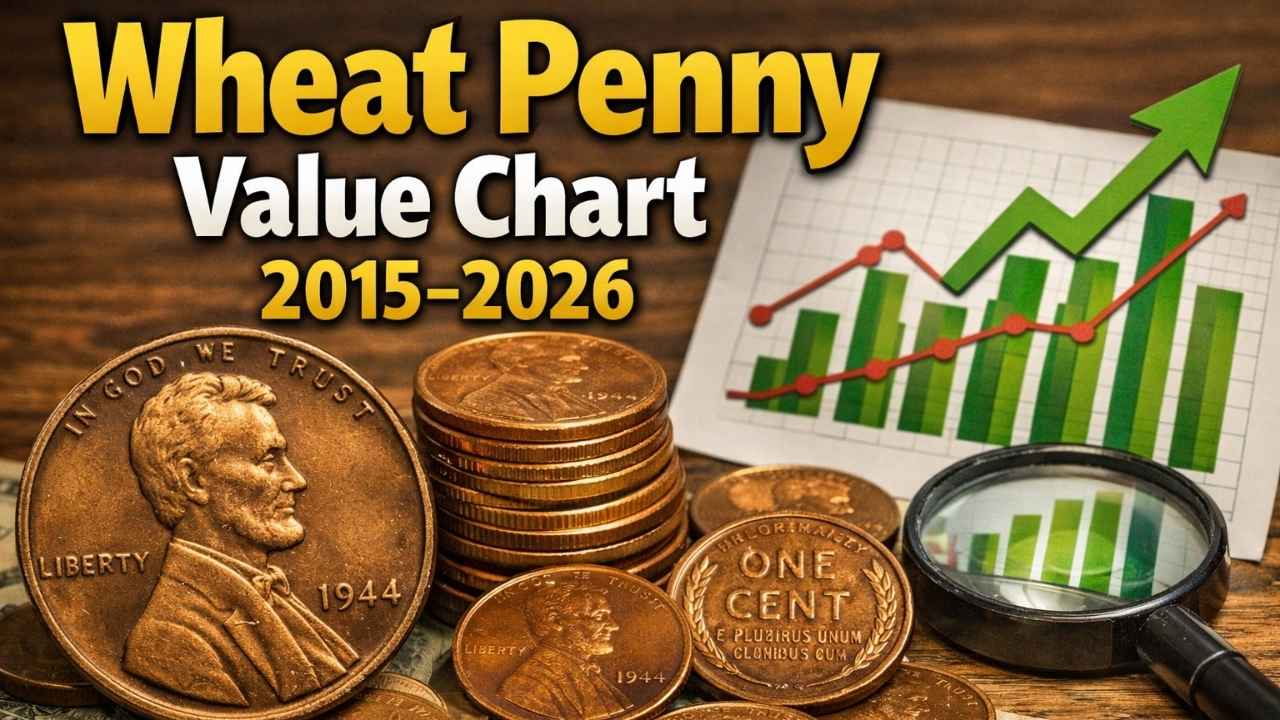
Wheat Penny Value Chart 2015–2026: The Lincoln Wheat Penny, minted from 1909 to 1958, is one of the most iconic coins in American history. Featuring Abraham Lincoln on the front and two wheat stalks on the back, it represents both national pride and agricultural prosperity. Even though production ended decades ago, collectors continue to treasure these coins. Between 2015 and 2026, values have shifted steadily, reflecting both nostalgia and investment interest. This guide explores how Wheat Penny prices evolved year by year, highlighting key dates, grading factors, and collector strategies.
What Determines Value
The value of a Wheat Penny depends on several factors. The year and mint mark are crucial, with rarities like the 1909-S VDB or 1914-D commanding high premiums. Condition plays a major role, as coins in mint state are worth far more than worn examples. Errors and varieties, such as the 1922 No D or the 1955 doubled die, add excitement and rarity. Finally, broader market trends and collector enthusiasm influence prices, especially during periods of economic uncertainty when tangible assets gain appeal.
Year by Year Value Chart 2015–2026
2015
Collectors showed renewed interest in Wheat Pennies thanks to online marketplaces. Common circulated coins sold for $0.10 to $0.50, while uncirculated rolls fetched $5 to $10. Key dates like the 1909-S VDB averaged $700 in fine condition.
2016
Values rose slightly as more young collectors entered the hobby. Circulated coins remained under $1, but mint state common dates reached $12. The 1914-D climbed to $1,200 in fine condition.
2017
Auction houses reported strong sales. The 1922 No D error gained attention, selling for $2,000 in fine condition. Common coins stayed affordable, making entry easy for beginners.
2018
Economic stability kept prices steady. Circulated coins held at $0.25 to $1, while uncirculated rolls averaged $15. The 1931-S rose to $150 in fine condition.

2019
Social media coin groups boosted demand. The 1909-S VDB reached $800 in fine condition, while the 1943 copper penny sold for over $200,000 at auction. Common coins remained accessible.
2020
Pandemic-era collecting surged. Many turned to hobbies at home, driving prices upward. Circulated coins averaged $0.50 to $1.50, while mint state common dates reached $20. Key dates saw double-digit growth.

2021
Collectors treated coins as investments. The 1914-D rose to $1,500 in fine condition. The 1955 doubled die gained popularity, selling for $1,200 in circulated grades. Common coins stayed affordable.
2022
Auction records continued. The 1943 copper penny exceeded $250,000. Common circulated coins held steady, while mint state rolls reached $25. The 1909-S VDB crossed $900 in fine condition.

2023
Values stabilized after rapid growth. Circulated coins averaged $0.50 to $1, mint state common dates $25 to $30. Key dates maintained strength, with the 1922 No D selling for $2,500 in fine condition.
2024
Collectors focused on quality. High-grade coins commanded premiums, while worn examples saw little change. The 1931-S reached $200 in fine condition. Common coins remained under $1.

2025
The market matured. Circulated coins averaged $0.75 to $1.50, mint state common dates $30 to $35. The 1909-S VDB surpassed $1,000 in fine condition, reflecting steady appreciation.
2026
By 2026, Wheat Pennies had become both nostalgic collectibles and reliable investments. Common circulated coins held at $1, mint state rolls reached $40, and key dates continued to climb. The 1943 copper penny remained legendary, selling for over $300,000 when offered.
Key Dates and Their Performance
Throughout 2015–2026, certain coins consistently stood out. The 1909-S VDB remained the most famous, steadily climbing in value. The 1914-D and 1922 No D error held strong, while the 1931-S showed steady appreciation. The 1955 doubled die fascinated collectors, and the 1943 copper penny continued to break records whenever it appeared.
The Importance of Grading
Professional grading services became increasingly important during this period. Coins certified as MS65 or higher commanded significant premiums. Collectors relied on grading to ensure authenticity and condition, creating a more transparent marketplace. This trend helped stabilize values and gave confidence to buyers and sellers alike.
Collector Strategies
Successful collectors between 2015 and 2026 followed a few key strategies. Beginners started with common circulated coins to learn grading and identification. More advanced collectors focused on acquiring key dates gradually, often saving for years to purchase a single coin. Investing in quality proved wise, as higher-grade coins appreciated more reliably. Staying informed through auction results and coin shows helped collectors make smart decisions.
Cultural Significance
Beyond monetary value, Wheat Pennies carry deep cultural meaning. They were the first U.S. coins to feature a real person, Abraham Lincoln, symbolizing a shift in design philosophy. The wheat stalks on the reverse represent prosperity and agriculture, tying the coin to America’s identity during the early twentieth century. Collectors often view these coins as artifacts of history, connecting them to stories of wartime economies, Depression-era struggles, and everyday life.
Conclusion
From 2015 to 2026, Wheat Pennies have proven to be enduring treasures. Their values rose steadily, driven by rarity, condition, and collector enthusiasm. Whether one is a casual hobbyist or a seasoned investor, the Wheat Penny remains a cornerstone of American numismatics. As the market continues to evolve, these coins will likely retain their place as both historical artifacts and symbols of prosperity.