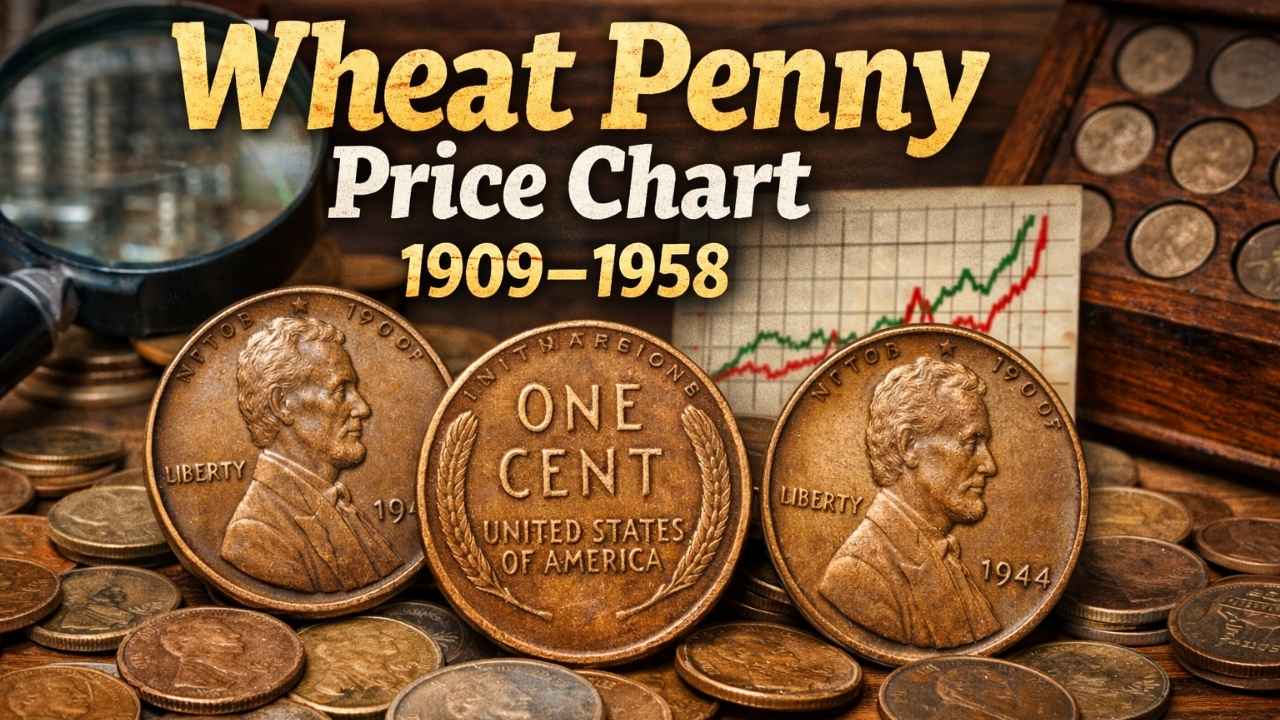
Wheat Penny Price Chart 1909–1958: The Wheat Penny, officially known as the Lincoln Wheat Cent, is one of the most beloved coins in American numismatics. Minted from 1909 to 1958, it features Abraham Lincoln on the obverse and two wheat stalks on the reverse. For collectors, these coins are more than just currency; they are pieces of history that reflect the economic and cultural shifts of the early twentieth century. While many Wheat Pennies are common, certain dates, mint marks, and errors can command impressive values.
The Birth of the Wheat Penny
The Wheat Penny was introduced in 1909 to commemorate the centennial of Abraham Lincoln’s birth. It was the first U.S. coin to feature a real person rather than a symbolic figure. Designed by Victor David Brenner, the coin quickly became iconic. The reverse design with two wheat stalks symbolized prosperity and growth, fitting for a nation entering a new century.
Key Dates and Rarities
Collectors often focus on key dates, which are coins that are scarce and valuable. Among Wheat Pennies, several stand out:
- 1909-S VDB: The most famous rarity, minted in San Francisco with Brenner’s initials prominently displayed. Only about 484,000 were struck, making it highly sought after.
- 1914-D: Another key date, with limited mintage from Denver. High-grade examples can fetch thousands.
- 1922 No D: A variety where the Denver mint mark is missing due to a worn die. This error is extremely valuable.
- 1931-S: With a low mintage of under one million, this coin is prized by collectors.
- 1955 Doubled Die: Perhaps the most dramatic error, showing clear doubling in the date and lettering. Even circulated examples are worth hundreds.
Mint Marks and Their Importance
Mint marks indicate where a coin was produced. Wheat Pennies were struck at Philadelphia (no mint mark), Denver (D), and San Francisco (S). Coins from San Francisco and Denver often had smaller mintages, making them more valuable. Collectors pay close attention to these marks when assessing rarity and price.
Condition and Grading
The value of a Wheat Penny depends heavily on its condition. Coins are graded on a scale from Poor (P-1) to Mint State (MS-70). A common Wheat Penny in worn condition may only be worth a few cents, but the same coin in uncirculated condition can be worth several dollars. Professional grading services provide authentication and standardized evaluation, which is crucial for high-value coins.
Price Chart Overview
While exact values fluctuate with the market, a general guide helps collectors understand what to expect:
- Common dates (1909–1958): Typically worth 10 to 50 cents in circulated condition, and $2 to $5 in uncirculated.
- Semi-key dates (1911-S, 1912-S, 1924-D, 1931-S): Range from $20 to several hundred depending on grade.
- Major key dates (1909-S VDB, 1914-D, 1922 No D, 1955 Doubled Die): Values start in the hundreds and can exceed $10,000 for pristine examples.
Error Varieties
Errors add another layer of excitement to collecting. Beyond the famous 1955 doubled die, other varieties include:
- Off-center strikes: Coins struck off-center can be worth $50 or more.
- Die cracks and cuds: These imperfections create unique patterns that collectors enjoy.
- Repunched mint marks: Some coins show doubled or tripled mint marks, increasing their value.
Historical Context
The Wheat Penny circulated during pivotal moments in American history, including World War I, the Great Depression, World War II, and the postwar boom. During the war years, pennies were even struck in steel (1943) to conserve copper for military use. These steel cents, though not technically Wheat Pennies, are often collected alongside them.

Collecting Strategies
For new collectors, starting with rolls of Wheat Pennies from coin dealers or estate sales is a good way to learn. Sorting through them teaches the basics of grading and spotting mint marks. More advanced collectors often focus on completing sets by year and mint mark, a challenging but rewarding pursuit. Building a complete set from 1909 to 1958 is considered a milestone in numismatics.
Investment Potential
While coin collecting is primarily a hobby, Wheat Pennies also hold investment potential. Key dates and high-grade coins tend to appreciate over time. However, like any collectible market, values can fluctuate. Collectors are advised to buy coins they enjoy rather than purely for profit, ensuring satisfaction regardless of market trends.

Conclusion
The Wheat Penny series from 1909 to 1958 offers a rich field for collectors, blending history, artistry, and rarity. From the iconic 1909-S VDB to the dramatic 1955 doubled die, these coins capture the imagination and command impressive prices. Whether you are just beginning or already a seasoned numismatist, the Wheat Penny remains a cornerstone of American coin collecting. With patience and attention to detail, you may uncover treasures that connect you to the past and enrich your collection for years to come.