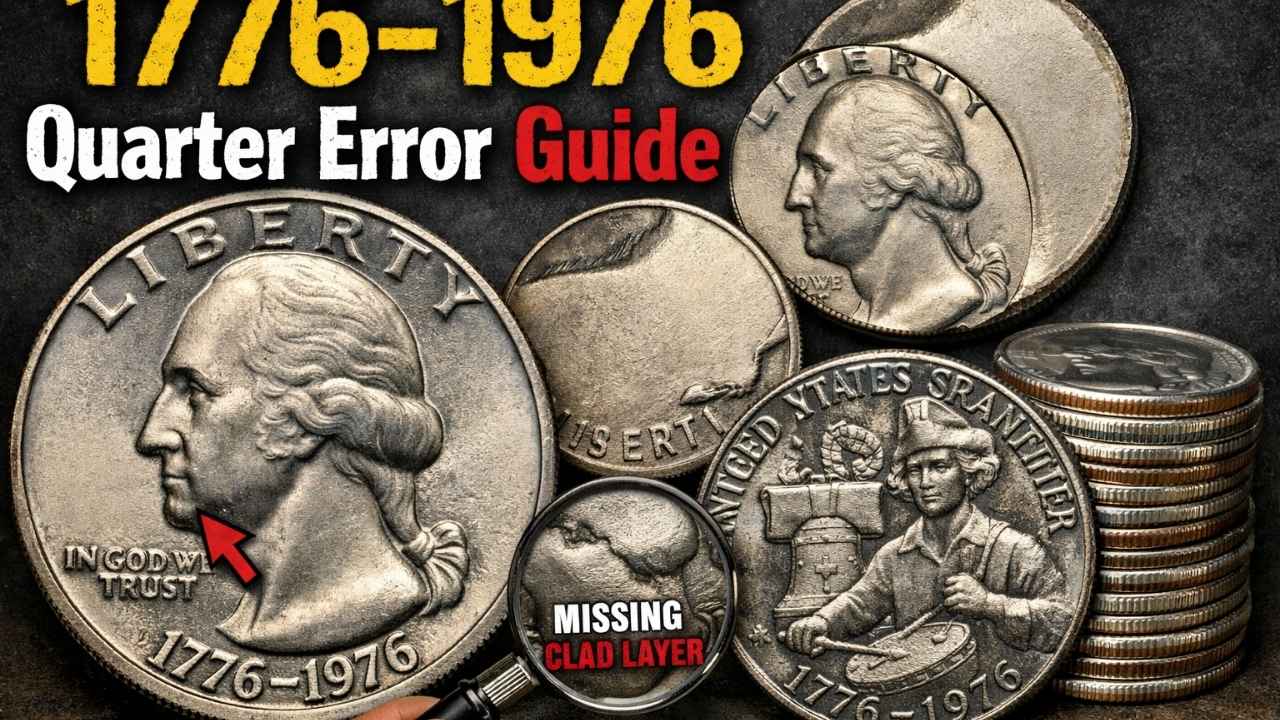
1776–1976 Quarter Error Guide: The Bicentennial Quarter is more than just a piece of pocket change. Released to honor America’s 200th birthday, this coin has become a legend among collectors. Millions were struck, yet only a fraction carry rare errors that transform them into treasures worth hundreds or even thousands of dollars. For coin enthusiasts, the hunt for these mistakes is both thrilling and rewarding.
The Story Behind the Bicentennial Quarter
In 1976, the United States celebrated two centuries of independence. To mark the occasion, the Mint produced special designs for the quarter, half dollar, and dollar. The quarter featured George Washington on the front and a colonial drummer on the back, surrounded by thirteen stars. Every coin carried the dual date 1776–1976, symbolizing the nation’s journey from its founding to its bicentennial celebration.

Why Errors Make Coins Valuable
Errors occur when something goes wrong during the minting process. These mistakes are not intentional, which makes them rare. Collectors prize them because they represent unique quirks in history. A normal Bicentennial Quarter might be worth face value, but an error coin can sell for hundreds or even thousands depending on its rarity and condition.
Doubled Die Obverse
One of the most famous errors is the doubled die obverse. This happens when the die used to strike the coin shifts slightly, creating a doubled image. On Bicentennial Quarters, doubling can appear in the lettering or even in Washington’s profile. A sharp-eyed collector who spots this variety could be holding a coin worth several thousand dollars.
Six-Finger Drummer Variety
Another fascinating error is the so-called six-finger drummer. Due to a die flaw, the drummer’s hand appears to have an extra finger. While subtle, this oddity has captured the imagination of collectors. Depending on condition, these coins can fetch hundreds of dollars, proving that even small details can make a big difference.
Silver Bicentennial Quarters
Most Bicentennial Quarters were made of copper-nickel, but the Mint also produced special collector versions in 40 percent silver. These were sold in sets and are far scarcer. A silver Bicentennial Quarter in pristine condition is already valuable, but if it carries an error, its worth can skyrocket into the thousands.

Filled Mint Mark Error
Some Denver-minted coins show a filled “D” mint mark. This happens when debris clogs the die, making the letter appear solid instead of clear. Though small, this error transforms an ordinary coin into a collectible that can bring significant premiums in the marketplace.
Struck Through Grease
A struck-through error occurs when grease or other material interferes with the die during striking. On Bicentennial Quarters, this often affects the drum design, leaving parts faint or missing. While less dramatic than doubled dies, these coins are still sought after and can command impressive prices.

Proof Coin Errors
Proof coins are specially made for collectors with polished dies and planchets. They are supposed to be flawless, but occasionally even these high-quality strikes show errors. A Bicentennial proof quarter with doubling or other anomalies is extremely rare and can sell for thousands at auction.
Market Values and Auction Highlights
The value of Bicentennial Quarter errors depends on rarity, condition, and demand. Circulated examples may sell for modest amounts, but mint state coins graded by professional services often reach into the thousands. For example, a high-grade doubled die obverse has sold for more than $8,000, while rare silver proofs with errors have approached $20,000. These numbers show just how much collectors are willing to pay for unique pieces of history.

Tips for Collectors
Finding these treasures requires patience and a sharp eye. A magnifying glass or jeweler’s loupe is essential for spotting doubling or small anomalies. Check the drummer’s hand carefully, examine the mint mark, and look for unusual features in the lettering. Proof sets are also worth reviewing, as rare errors sometimes slip through even in these carefully made coins. Persistence often pays off, and many collectors have discovered valuable coins in ordinary rolls of quarters.
Historical Importance
Beyond their monetary value, Bicentennial Quarters carry deep cultural meaning. They symbolize America’s 200th birthday and reflect a moment of national pride. Owning one of these error coins connects collectors not only to numismatic history but also to the broader story of the nation’s celebration of independence. Each coin is a small piece of history, and errors make them even more unique.
Conclusion
The 1776–1976 Bicentennial Quarter is more than just a commemorative coin. Its errors and varieties have transformed it into a treasure hunt for collectors. From doubled dies to silver strikes, these mistakes elevate ordinary coins into valuable artifacts. Whether you are a seasoned numismatist or a casual hobbyist, keeping an eye out for these rare quarters could lead to a remarkable discovery worth big money. The next time you come across a Bicentennial Quarter, take a closer look—you might just be holding a hidden gem.